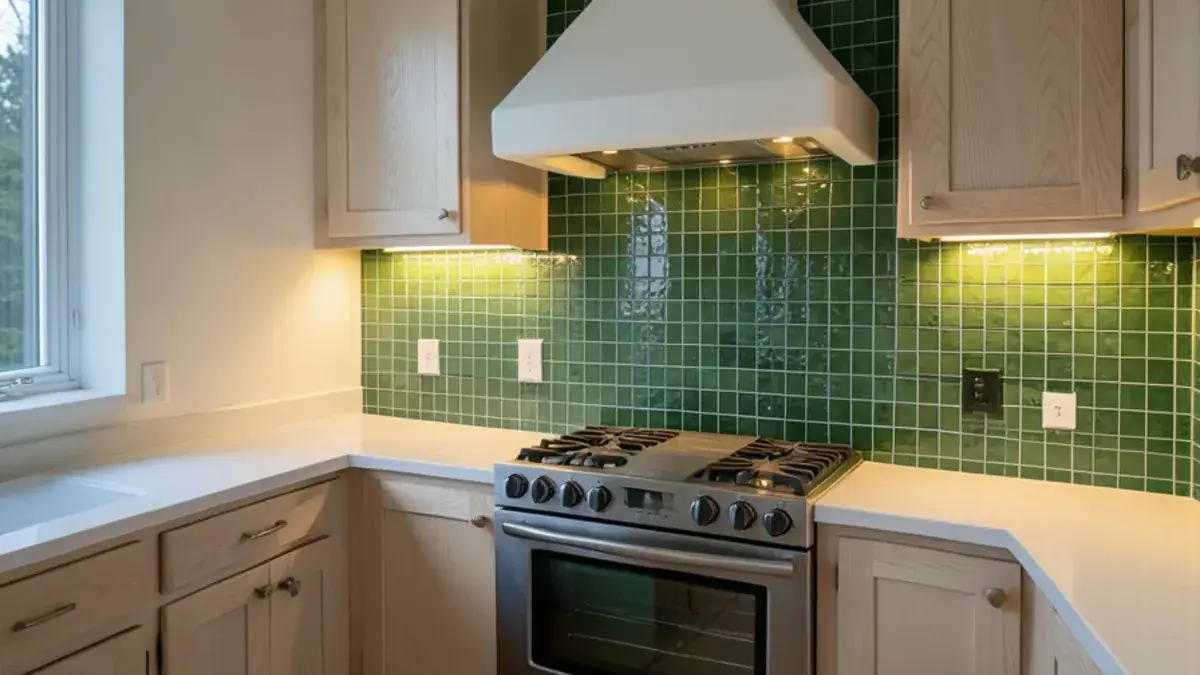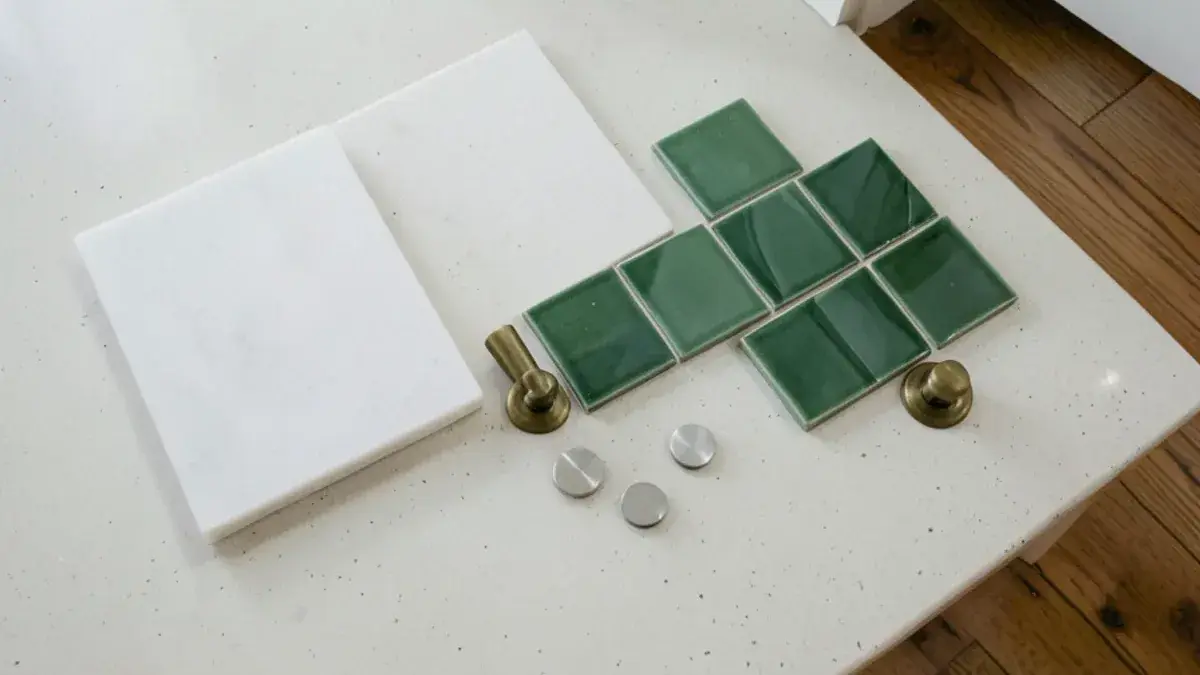
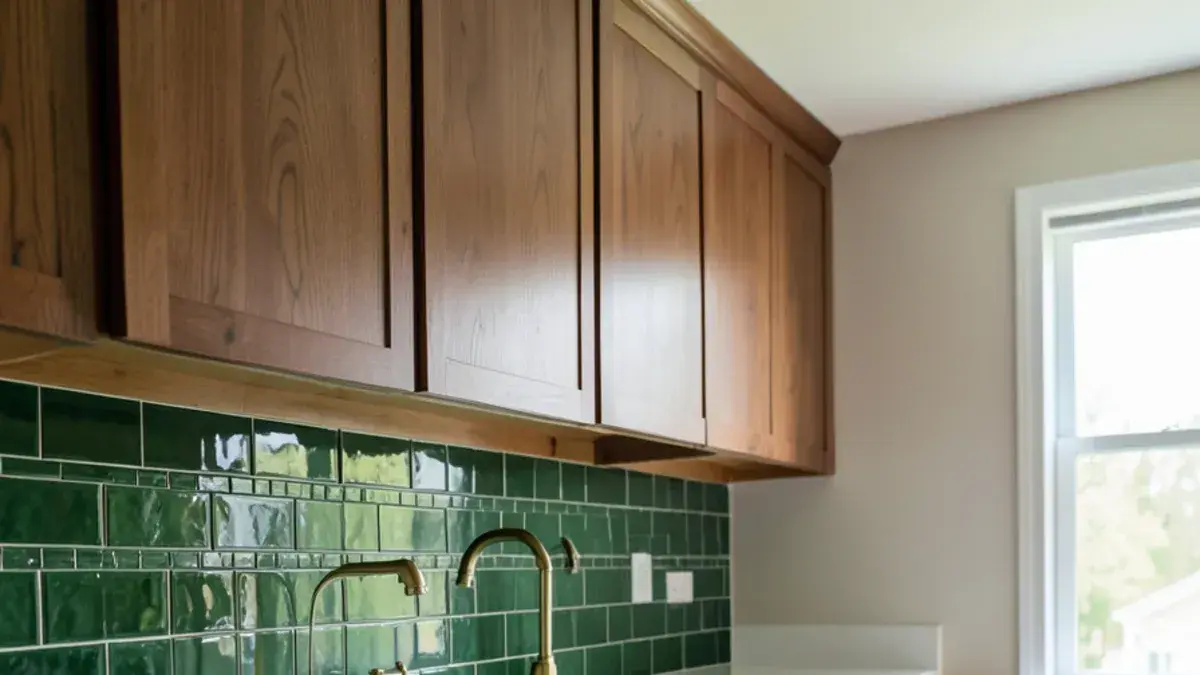
The most reliable rule for backsplash ideas that work: let one surface lead and the other support it. A busy, speckled or boldly veined countertop calls for a quiet backsplash, while a calm or softly veined countertop leaves room for color, pattern or texture. Choose the countertop first, then bring tile samples to it.
Backsplash tile is one of the selections Nick helps clients make during design, along with the tile plan that shows layout, edges and outlet locations. Our tile backsplash page covers that service; this post focuses on the pairings themselves.
How do you match a backsplash to a busy countertop?
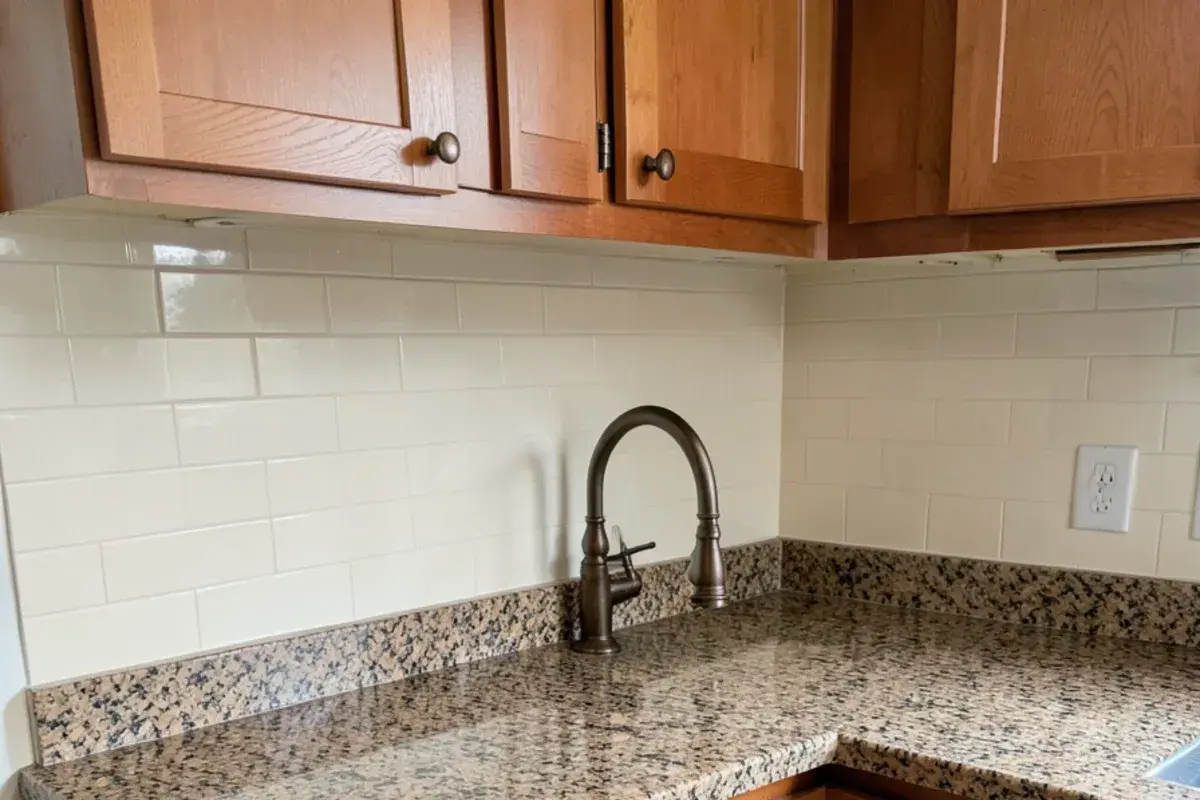
Speckled granite and dramatic natural stone already give the eye plenty to read. Adding a patterned or multicolored tile next to them makes the wall feel restless. The fix is restraint: pick one color that appears in the stone, often a lighter background tone, and use it in a simple tile.
- A solid-color subway or rectangular tile in a shade pulled from the stone.
- A matte or honed finish that contrasts with a polished counter.
- Grout close to the tile color so the field reads as one calm surface.
- A slab backsplash in the same stone, so the pattern continues rather than competes.
Questions about your own project? Call Nick at (810) 923-8792
Call Kitchen NV in Pinckney, Monday to Friday, 9 a.m. to 5 p.m. Design consultations are by appointment.
- ★ 5.0 on Google (28 reviews)
- MI Residential Builder #2101209269
- CMKBD · CAPS · CLIPP designer
- Serving since 2020
Which backsplash ideas suit a quiet quartz countertop?
Plain white, gray or softly veined quartz is the easiest countertop to design around, because it gives the backsplash freedom. This is where handmade-look tile, color, texture and pattern earn their place.
- Glazed or handmade-look tile with slight variation in color and surface.
- Color, such as green, blue or warm clay, tied to the cabinets or hardware.
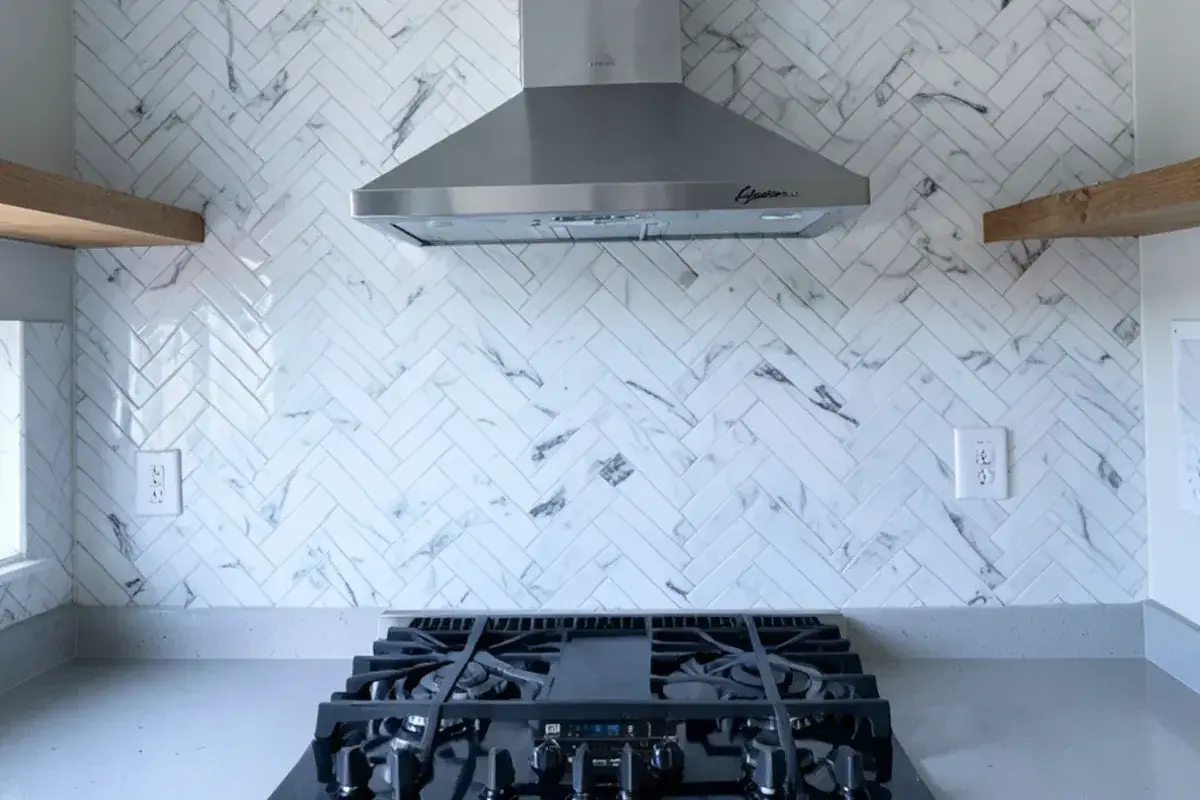
- Pattern through layout: herringbone, vertical stack or a basketweave.
- Large-format porcelain with a marble look for fewer grout lines.
One caution: a marble-look tile above marble-look quartz rarely works, because the two patterns never quite match and end up competing. Pick one veined surface and keep the other simple.
Countertop and backsplash pairings at a glance
| Countertop | Pairings that work | Use caution with |
|---|---|---|
| Plain or softly veined quartz | Colored, glazed or patterned tile; zellige-style texture | Marble-look tile that competes with veining |
| Speckled granite | Solid-color tile pulled from one stone tone | Mosaics and multicolored patterns |
| Boldly veined marble or quartzite | Matching slab backsplash or simple white tile | Any patterned or high-contrast tile |
| Dark solid granite or soapstone-look | Light tile for contrast, or warm handmade tile | Dark tile that makes the wall feel heavy |
| Butcher block on an island | Tie the wall tile to the perimeter counter instead | Choosing tile to match the wood alone |
Which backsplash materials hold up behind the range?
Looks come first in a pairing, but the wall behind a cooktop takes grease, heat and daily scrubbing. Material choice decides how much of that you will notice in five years.
| Material | Strengths | Trade-offs |
|---|---|---|
| Glazed ceramic | Huge color range, easy to clean, easy to cut around outlets | Handmade-look glazes vary piece to piece, which is the charm and the risk |
| Porcelain | Dense and stain resistant; large formats mean fewer grout lines | Big tiles demand a flat wall, and cutting them for outlets takes care |
| Glass | Reflects light and wipes clean | Shows every smudge; edges and cuts need clean finishing |
| Natural marble or limestone tile | Soft, classic look that pairs with stone counters | Etches from acids and needs sealing, just like a marble countertop |
| Zellige-style terracotta | Deep, uneven glaze that catches light | Irregular edges and wider grout lines collect more grease behind a range |
| Stone slab | Continuous surface, almost no grout | Uses more stone and needs precise outlet cutouts |
Grout is the other half of the decision. Standard cement grout should be sealed and will darken near the range over time. Urethane and epoxy grouts resist stains far better, though epoxy is harder to install neatly and costs more. Narrow joints take unsanded grout and wider joints take sanded; your installer will match it to the tile's recommended spacing.
Lighting and outlets: the details that show up on tile
Undercabinet lights rake straight down the backsplash, so they reveal every bump, lip and glaze change. That flatters handmade tile and punishes uneven installation. Glossy tile also mirrors individual LED dots, so a continuous diffused strip set toward the front of the cabinet usually looks better than puck lights. Working the fixtures out during kitchen lighting design avoids a wall of hot spots.
- Outlets in the tile field should land centered on a tile or a grout line, which only happens if the tile plan shows them.
- Outlet strips under the upper cabinets keep the tile uninterrupted, a popular choice behind slab backsplashes.
- Cover plates in a color close to the tile, or screwless plates, draw less attention than standard white.
Slab backsplash: when the countertop goes up the wall
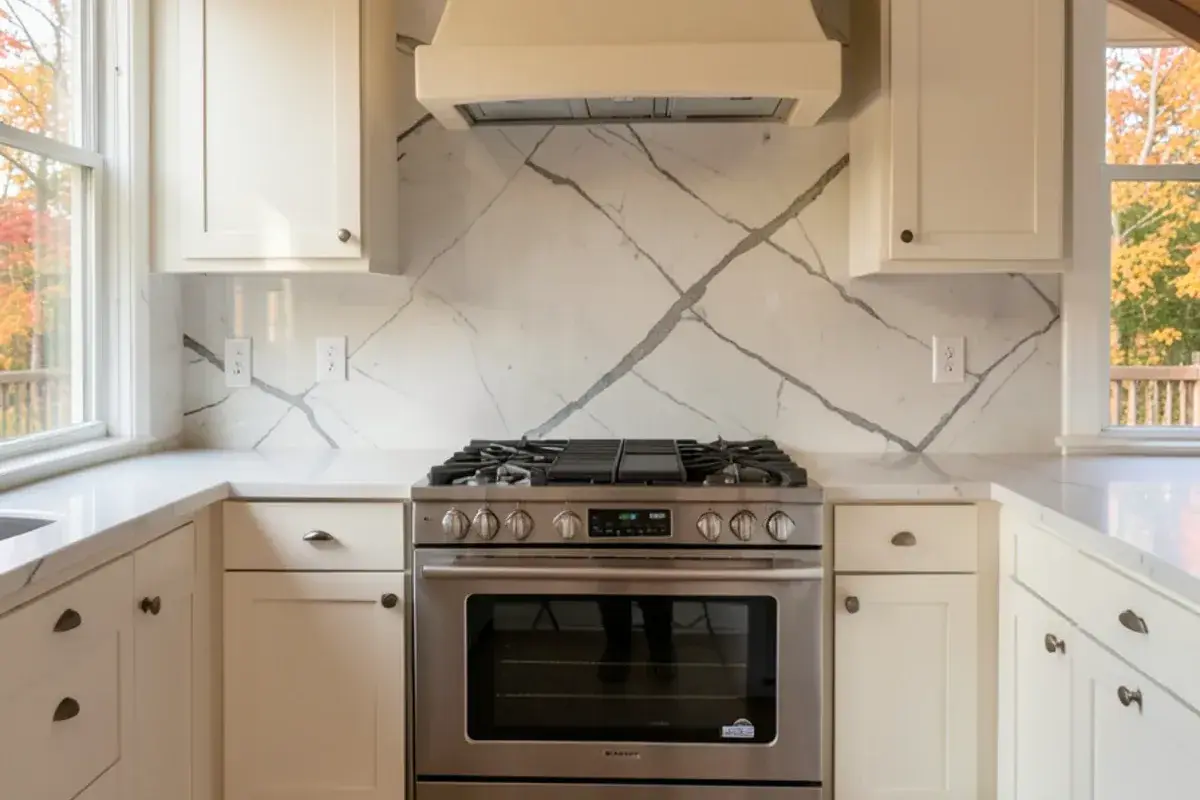
A full-height slab backsplash runs the countertop material up the wall, often behind the range or the full length of the counter. With veined quartzite or marble, the veins can continue from counter to wall, which creates a striking, continuous surface with very few seams to clean.
The trade-offs are cost and planning. A slab backsplash uses more material, sometimes an extra slab, and outlets have to be cut precisely into the stone. Deciding on it before the slab is reserved lets the fabricator lay out countertop and wall pieces together so the veins line up as closely as possible.
How high should a kitchen backsplash go?
Between countertop and upper cabinets, run tile all the way up to the underside of the cabinets. The old 4-inch stone splash with painted wall above still works in laundry rooms, but in a kitchen a full-height tile field looks finished and cleans more easily.
- Behind the range, take tile up to the hood, or to the ceiling if the hood is a chimney style.
- On walls without uppers, stop at a clear line: the ceiling, a window head or the edge of a shelf run.
- End the tile at a cabinet side or a wall corner, never in the middle of open wall.
- Finish exposed tile edges with a matching bullnose, a metal edge profile or a pencil trim.
- Mark outlet and switch locations on the tile plan so they land neatly within the pattern.
Nick on testing tile against stone
I never pick backsplash tile from a photo. I put the actual tile next to the actual countertop sample, under the light the kitchen will have, and look at it morning and evening. Colors that match perfectly in a store can clash beside a south-facing window.
The trade-off I warn people about is maintenance against character. The tile with the most texture and variation is usually the one with the most grout and the most nooks for grease. Behind the range I often steer toward a smoother tile or a slab, and let the character tile run on the quieter walls.
I also draw the tile plan before anyone orders. Where the pattern starts, how it meets the window, where outlets fall: those small decisions are what make a backsplash look intentional. Homeowners in South Lyon and Pinckney can have samples brought to the house during selections, which is the most reliable way to judge them.

Nicholas Vanderhovel, CMKBD, CAPS, CLIPP
Owner and designer at Kitchen NV in Pinckney, MI, and a Michigan-licensed residential builder (#2101209269). About Nick
Backsplash Ideas That Match Your Countertop: quick answers
Should the backsplash be lighter or darker than the countertop?
Usually lighter, or at least close in value, because a darker wall above a lighter counter can make the room feel heavier. Contrast works when it is deliberate, such as light tile above a dark granite. The safer approach is to pull one tone from the countertop. Nick reviews samples side by side during finish selection so the contrast is judged in real light.
Is a 4-inch backsplash outdated in a kitchen?
In most kitchens, yes. A short stone splash with painted drywall above it looks unfinished next to full-height tile and leaves paint exposed to splatter. It remains a reasonable choice in laundry rooms, bathrooms and budget-driven rentals. For a kitchen remodel, Nick generally plans tile from the countertop to the underside of the upper cabinets.
Do I choose the backsplash before or after the countertop?
After. The countertop is the larger, harder-to-change surface, and natural stone varies from slab to slab, so settle on the counter first and then bring tile samples to it. If you already love a specific tile, keep it in mind while selecting slabs. During design, Kitchen NV sequences selections so the countertop is chosen before backsplash tile is ordered.
Can new tile go over an old backsplash?
Sometimes, but it rarely saves as much as people hope. Tiling over tile adds thickness, so outlets need box extenders, the new edge sticks out past the old one and the joint at the upper cabinets may look heavy. If the old tile is loose or the countertop is changing anyway, removal is the cleaner path. Nick checks the existing wall and the new counter depth before recommending either.
Let one surface lead, test tile against the real countertop under your own light, run the backsplash to a clean stopping line and plan outlets into the layout. Those few choices make the pairing look deliberate.
For help choosing backsplash tile with your countertop and drawing the tile plan, the studio line is (810) 923-8792; Nick can also cover finish selection across the whole kitchen.
Related services and areas