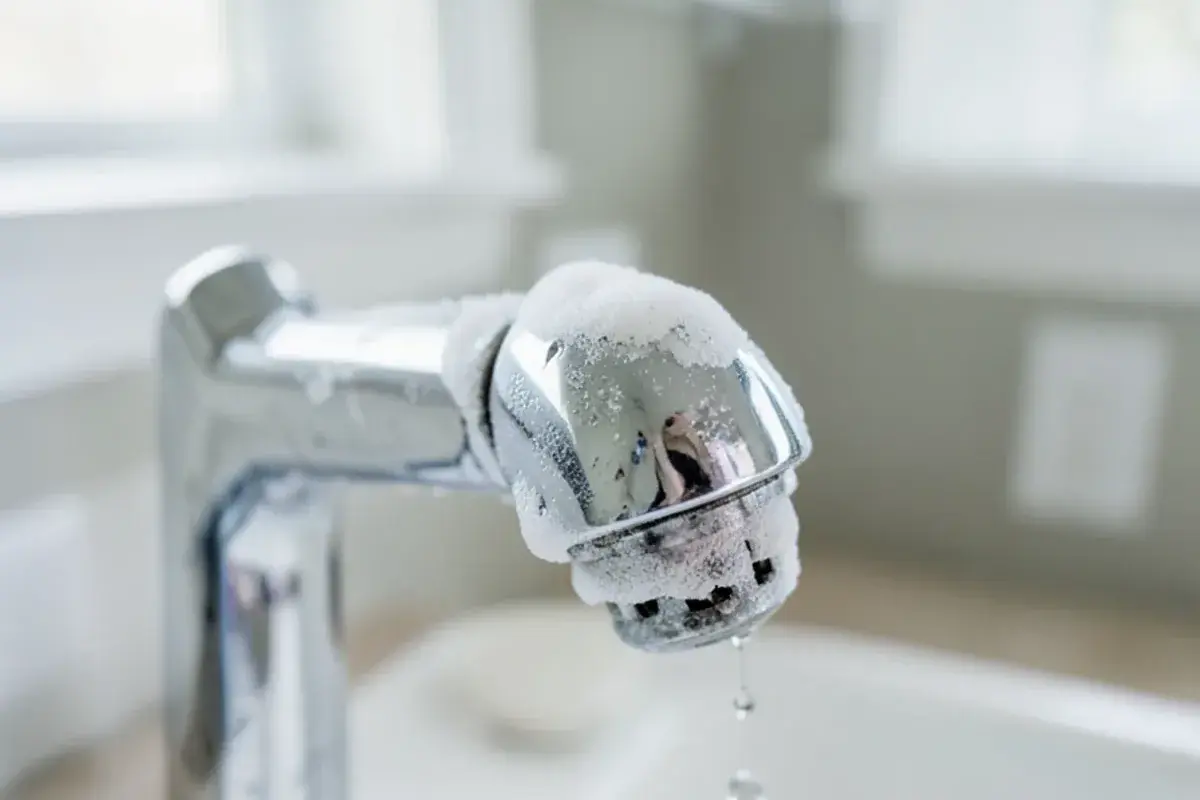
A good hard water kitchen faucet has ceramic disc valves, a removable aerator, rub-clean spray nozzles and a finish that disguises spotting. Those features matter because mineral-heavy water leaves scale on everything it touches, and the faucet is the first thing to show it.
Many homes around Pinckney, Putnam Township and Hamburg Township draw water from private wells, and hardness is one of the first things worth testing for when you plan a kitchen. Below we explain how hardness is measured, then walk through faucets, sinks, counters and appliances with mineral-rich water in mind.
How hard is your water, and why does it matter?
Water hardness mostly comes from dissolved calcium and magnesium. When that water evaporates or heats up, the minerals stay behind as the white crust you see on faucet tips, sink rims and the inside of a kettle. The U.S. Geological Survey classifies hardness like this:
| Classification | Milligrams per liter |
|---|---|
| Soft | 0 to 60 |
| Moderately hard | 61 to 120 |
| Hard | 121 to 180 |
| Very hard | More than 180 |
Well water can also carry iron, which leaves orange-brown stains, and other minerals that affect taste and color. Before choosing fixtures or a treatment system, send a sample to a state-certified drinking water lab (ask your local health department if you are unsure where to send it). Knowing the numbers lets your plumber size a softener or filter properly and lets us choose finishes that suit the water you actually have.
Questions about your own project? Call Nick at (810) 923-8792
Call Kitchen NV in Pinckney, Monday to Friday, 9 a.m. to 5 p.m. Design consultations are by appointment.
- ★ 5.0 on Google (28 reviews)
- MI Residential Builder #2101209269
- CMKBD · CAPS · CLIPP designer
- Serving since 2020
What should a well water test include before you pick fixtures?
The EPA’s guidance for private well owners is to test every year for total coliform bacteria, nitrates, total dissolved solids and pH, and to test right away after any repair or replacement of part of the well system, or if the water’s taste, color or odor changes. Those are health checks first. For kitchen planning, ask the lab to add hardness and iron so you know what the faucet and sink will face.
| Test result | What you see in the kitchen | Design and treatment response |
|---|---|---|
| Hard or very hard (above 120 mg/L) | White crust on aerators, film on glasses, scale in the kettle and ice maker | Brushed finishes, ceramic cartridges, a softener sized by the plumber |
| Iron present | Orange-brown rings in white sinks and on grout | Iron filtration first; otherwise favor stainless or mid-tone composite sinks |
| High total dissolved solids | Spotting that returns quickly after wiping | Under-sink filtration for drinking water, room in the sink base for it |
| Low pH (acidic water) | Blue-green stains near fixtures where copper plumbing is attacked | Treatment before new fixtures go in; ask the plumber about neutralizing |
Softener dealers often quote hardness in grains per gallon while labs report milligrams per liter, so ask for both figures on the same sheet before you compare them with the USGS ranges above. If a softener goes in during the remodel, retest afterward. It confirms the system is working and gives the faucet manufacturer’s care instructions something real to apply to.
What should you look for in a hard water kitchen faucet?
The faucet takes the most abuse from minerals, so a few features are worth insisting on:
- Ceramic disc valve cartridges. They resist the grinding wear that mineral grit causes in older washer-style valves, and a replacement cartridge is easy to swap.
- A removable aerator. You should be able to unscrew it and soak it in a descaling solution without tools beyond a cloth.
- Soft rubber or silicone spray nozzles. Scale on flexible nozzles can be rubbed off with a fingertip instead of scraped.
- A forgiving finish. Brushed stainless and brushed nickel hide spots well; polished chrome shows spots but wipes clean easily; matte black and deep bronze can show white residue clearly.
- Readily available parts. Ask whether cartridges, aerators and spray heads are sold separately, since hard water shortens their life.
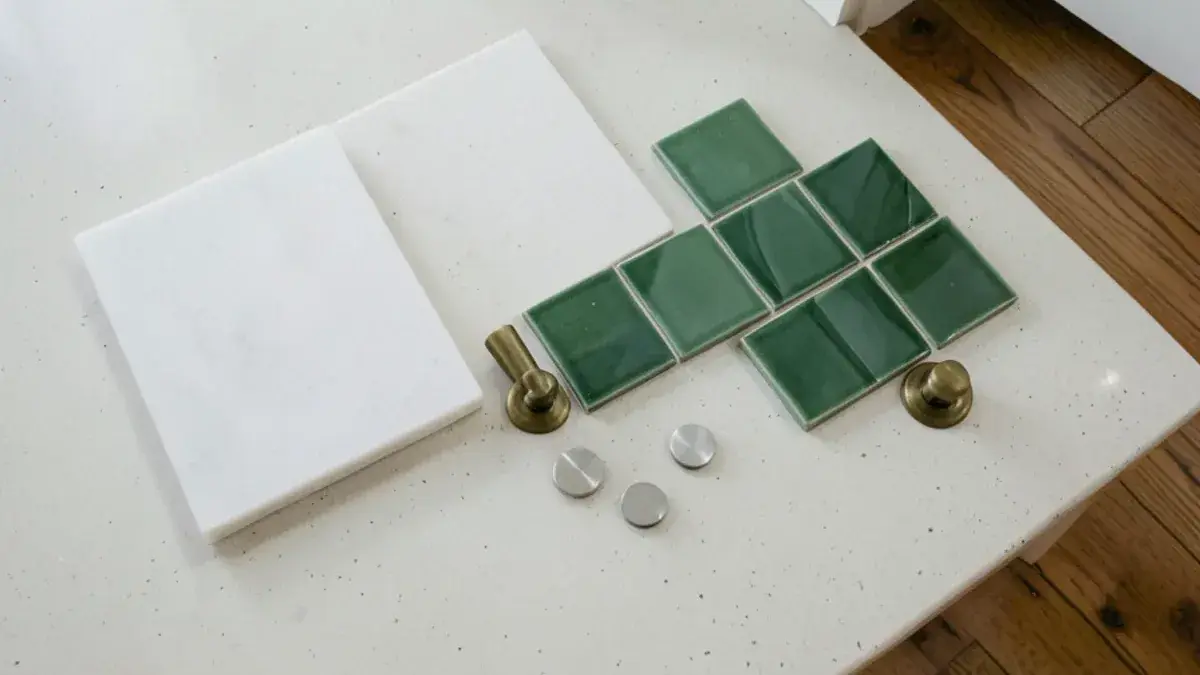
Faucets are one of the selections we coordinate in finish selection, where the water test results become part of the conversation rather than an afterthought.
Sinks that stand up to mineral-rich water
Each sink material reacts to hard and iron-bearing water a little differently.
| Sink material | With hard water | Care notes |
|---|---|---|
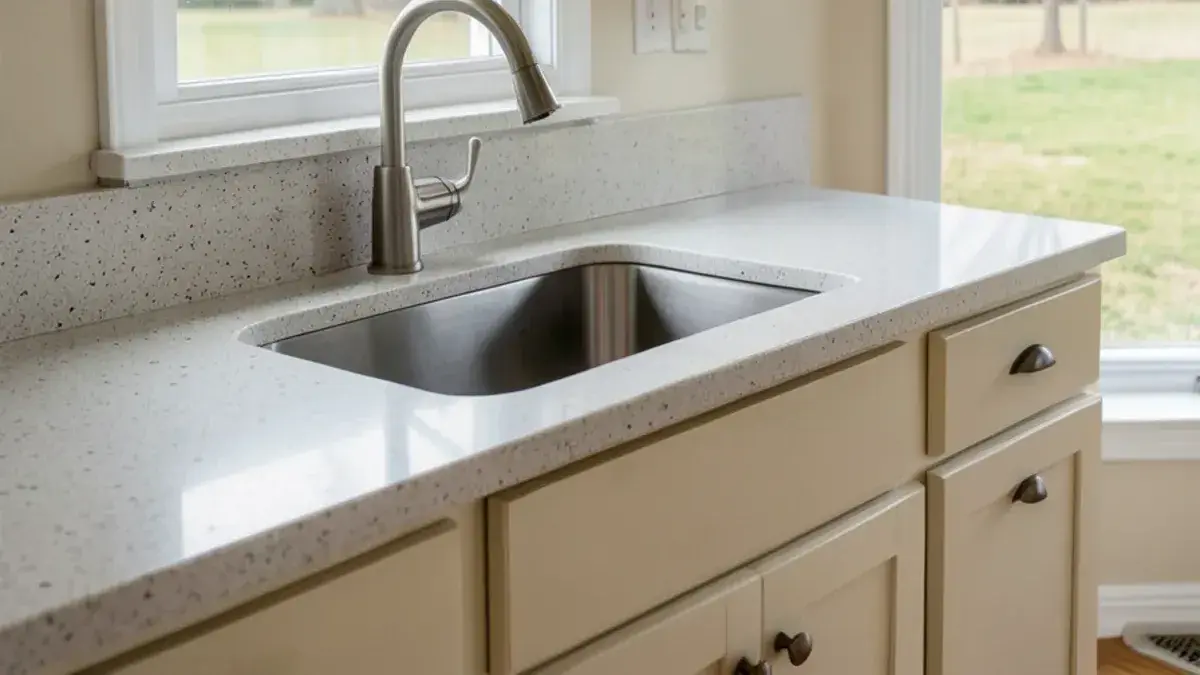
| Brushed stainless steel | Hides light spotting well | Wipe dry; mild descaler for buildup |
| Fireclay or enameled cast iron | Shows iron stains on white surfaces | Gentle non-abrasive cleaners; avoid harsh scouring |
| Dark composite granite | White mineral film can show on dark colors | Regular wipe-down; follow the maker’s descaling advice |
| Light composite | Hides scale better than dark colors | May show iron staining over time |
If your test shows iron, a white fireclay farmhouse sink is still possible, but plan for water treatment first or accept more frequent cleaning.
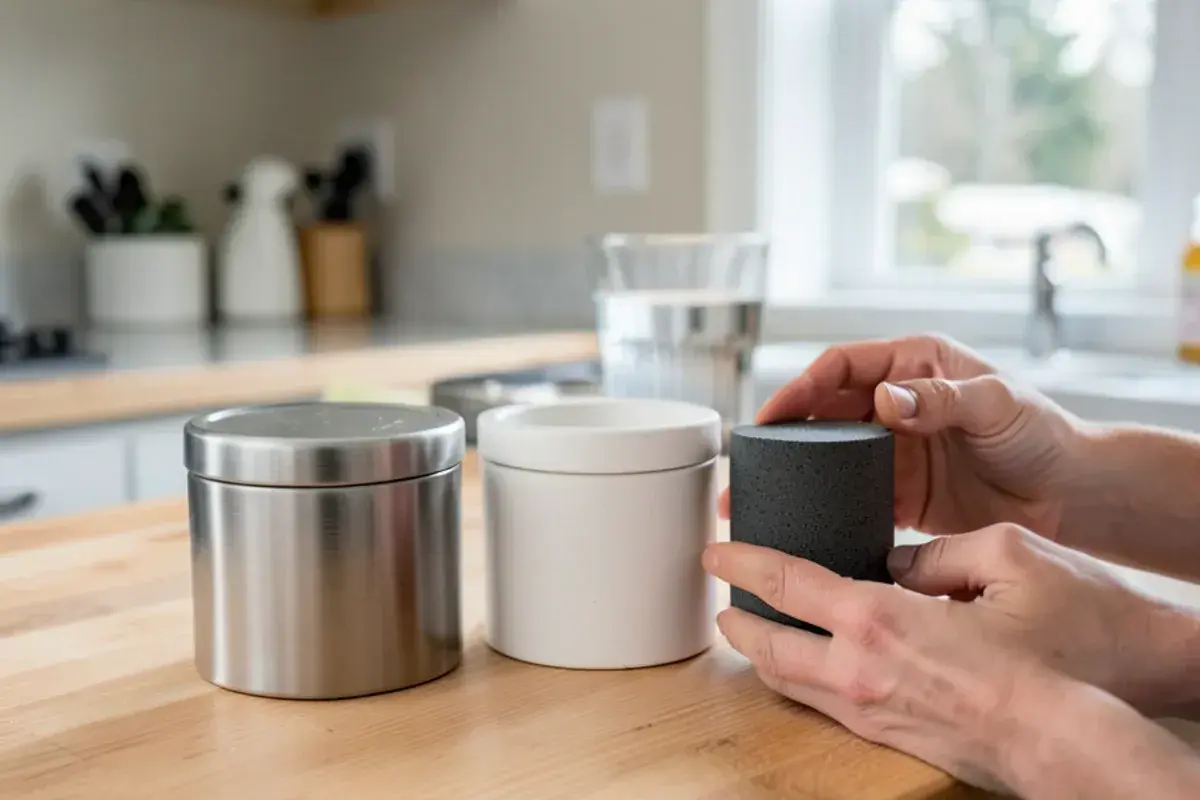
Which countertops handle hard water around the sink?
The counter around the sink sees standing water every day, and the cleaning products people use against scale matter as much as the water itself.
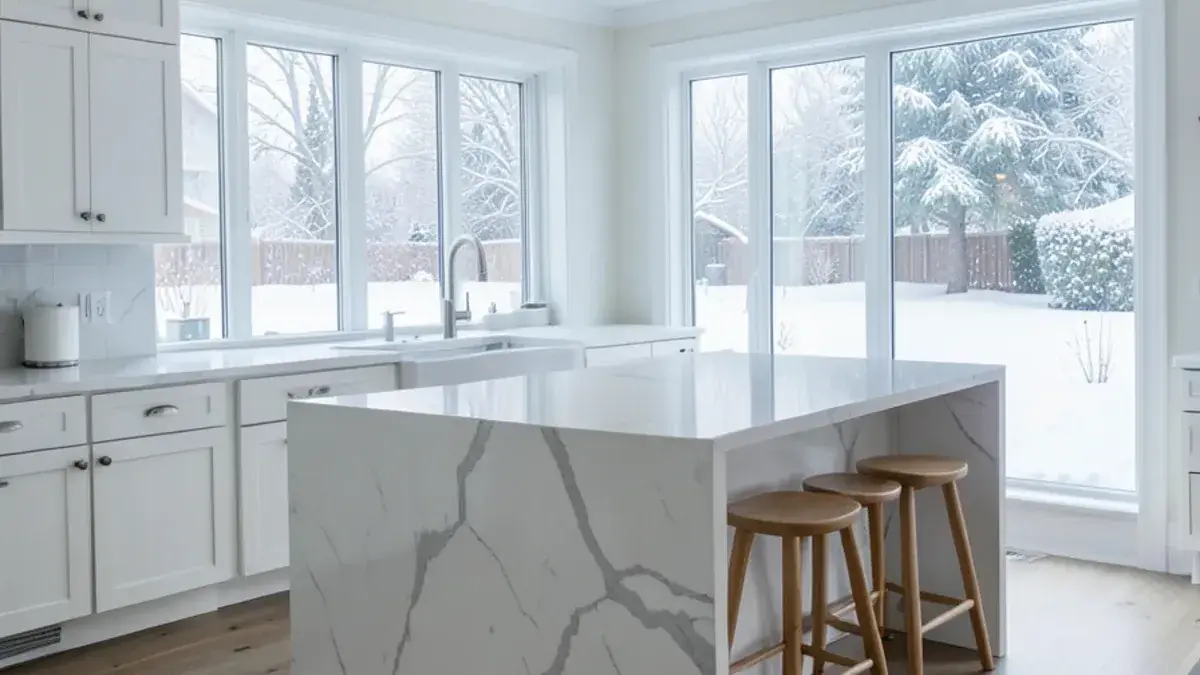
- Quartz is non-porous and resists staining, though very dark solid colors can show dried water spots. Our quartz countertops page covers color choices.
- Granite holds up well when sealed; mid-tone patterns hide mineral spots better than polished black.
- Marble and some quartzites can etch from acidic cleaners, including the vinegar many people reach for to dissolve scale. Use cleaners labeled safe for stone.
- Soapstone is dense and does not etch from acids, though it darkens with use and some homeowners oil it to even the color.
Planning appliances and water treatment into the kitchen
Hard water affects more than fixtures. Refrigerator ice makers, dishwashers and coffee machines all collect scale, and water treatment equipment needs a home. Plan for it in the design rather than squeezing it in later:
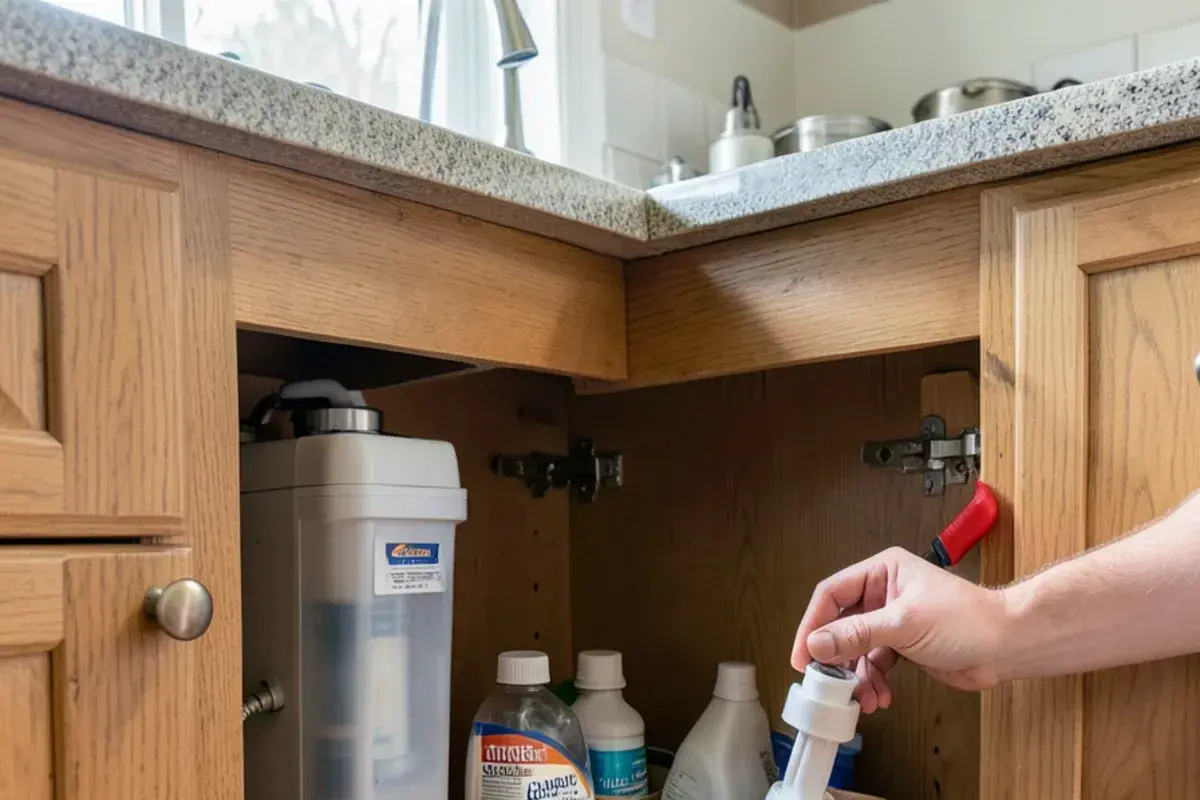
- Leave room in the sink base for a drinking water filter or reverse osmosis unit if your plumber recommends one, and plan an outlet if it needs power.
- Choose a dedicated filtered water faucet finish that matches the main faucet.
- Confirm with your plumber where a softener or iron filter will tie in, usually in the basement or utility room, so the kitchen supply is treated.
- Check appliance manuals for water quality guidance, since some makers recommend filters or specific detergents for hard water.
- Keep shutoff valves reachable behind the dishwasher toe kick or in the sink base, since scale-prone supply lines and valves get serviced more often on hard water.
- Specify a refrigerator whose water filter is accessible from the front, so changing it does not mean pulling the unit out of a tall cabinet surround.
Homeowners in Putnam Township and Hamburg Township often bring their well test results to the first meeting, which lets the fixture conversation start from real data.
Nick on choosing fixtures for well water
Designing kitchens across Livingston County, I treat the water test as a design document. A homeowner may love a matte black faucet and a dark composite sink, and on soft water that pairing is lovely. On very hard water, it can mean wiping white residue every day. I would rather talk about that before the order than after.
My usual advice is to pair forgiving finishes at the sink, where water sits, with bolder finishes on hardware and lighting, where it does not. You still get the look you want, and the surfaces that see the most water stay easy to keep clean.

Nicholas Vanderhovel, CMKBD, CAPS, CLIPP
Owner and designer at Kitchen NV in Pinckney, MI, and a Michigan-licensed residential builder (#2101209269). About Nick
Well Water and Hard Water: quick answers
What is the most durable faucet finish for hard well water?
Brushed stainless and brushed nickel are the most forgiving, because their texture hides water spots and light scale. Polished chrome shows spots but cleans easily. For homes on private wells around Pinckney and Hamburg, we usually suggest pairing a brushed finish at the sink with ceramic disc cartridges and a removable aerator that can be descaled.
Does a softener need to go in before new kitchen fixtures?
Test first, then decide with a plumber or water treatment specialist. If your well is hard or carries iron, treating the water protects new faucets, appliances and counters from the start. The design should account for any under-sink filter, and the treatment equipment usually lives in the basement or utility room where the supply enters the house.
Can I use vinegar to clean hard water spots off my counters?
Not on marble, limestone or some quartzites, because acids can etch them. Vinegar is generally safer on stainless sinks and many faucet finishes, but check the manufacturer’s care instructions. In Livingston County homes with hard well water, a stone-safe cleaner for counters and a separate descaler for the aerator keep everything in better shape.
How often should I test the well before and after a kitchen remodel?
The EPA recommends testing a private well every year for bacteria, nitrates, total dissolved solids and pH, and immediately after work on the well system or any change in taste, color or smell. For a remodel, test before selections so hardness and iron guide the fixture choices, then again after any new softener or filter goes in. Livingston County homeowners can ask the health department where to send samples.
Hard well water is manageable with the right choices: test the water, choose faucets with ceramic cartridges and removable aerators, pick sink and counter materials that suit your results, and leave room for treatment equipment. Planned together, those decisions keep a new kitchen looking new.
Bring your well test to the conversation. At (810) 923-8792, Nick can walk through which faucets, sinks and counters make sense for those numbers.
Sources
- Protect Your Home’s Water — U.S. Environmental Protection Agency
- Explanation of Water Hardness (archived) — U.S. Geological Survey
Related services and areas