Good kitchen cabinet care is mostly restraint: a soft cloth, warm water with a drop of mild dish soap, an immediate dry-off, and keeping steam and standing water away from the wood. Painted and stained finishes are both tough, but harsh cleaners, abrasive pads and slow leaks wear them down faster than daily cooking ever will.
Below is the routine Nick recommends for new custom kitchen cabinets and for older cabinetry worth protecting, along with the small hinge and drawer adjustments you can make yourself. Your cabinet manufacturer's care sheet is the final word, so keep it with your warranty paperwork.
How should you clean painted kitchen cabinets?
Most factory-painted cabinets carry a cured, sprayed topcoat that sheds everyday grime easily. The goal is to remove grease before it builds up, without scratching or softening that finish.
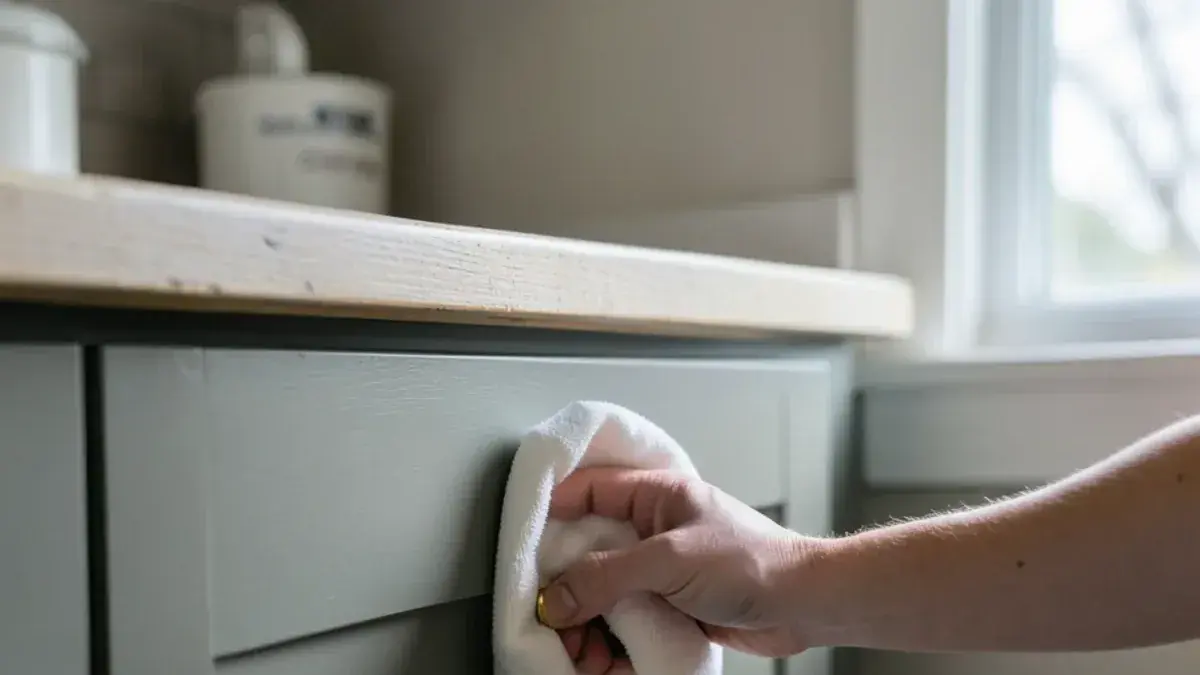
Mix a mild solution
A few drops of gentle dish soap in a bowl of warm water. Nothing with ammonia, bleach or citrus solvents.
Wring the cloth almost dry
Use soft microfiber. Water that runs into door joints and edges does more harm than the grease you are removing.
Wipe with the grain or along the frame
Work top to bottom, paying extra attention to the areas around pulls and the doors nearest the range.
Dry right away
Follow with a clean, dry cloth so no moisture sits on the surface or in the profile of the door.
Skip magic erasers, scouring pads and powdered cleansers on painted doors. They work by abrasion, and they will dull the sheen in the exact spot you scrubbed, which then looks like a stain of its own.
Questions about your own project? Call Nick at (810) 923-8792
Call Kitchen NV in Pinckney, Monday to Friday, 9 a.m. to 5 p.m. Design consultations are by appointment.
- ★ 5.0 on Google (28 reviews)
- MI Residential Builder #2101209269
- CMKBD · CAPS · CLIPP designer
- Serving since 2020
What changes with stained wood cabinets?
Stained cabinets clean the same way, but wood grain hides smudges better and shows dryness sooner. Avoid silicone-based furniture sprays; they leave a film that attracts dust and can complicate any future refinishing. A finish-safe wood cleaner used occasionally is fine if your manufacturer approves it.
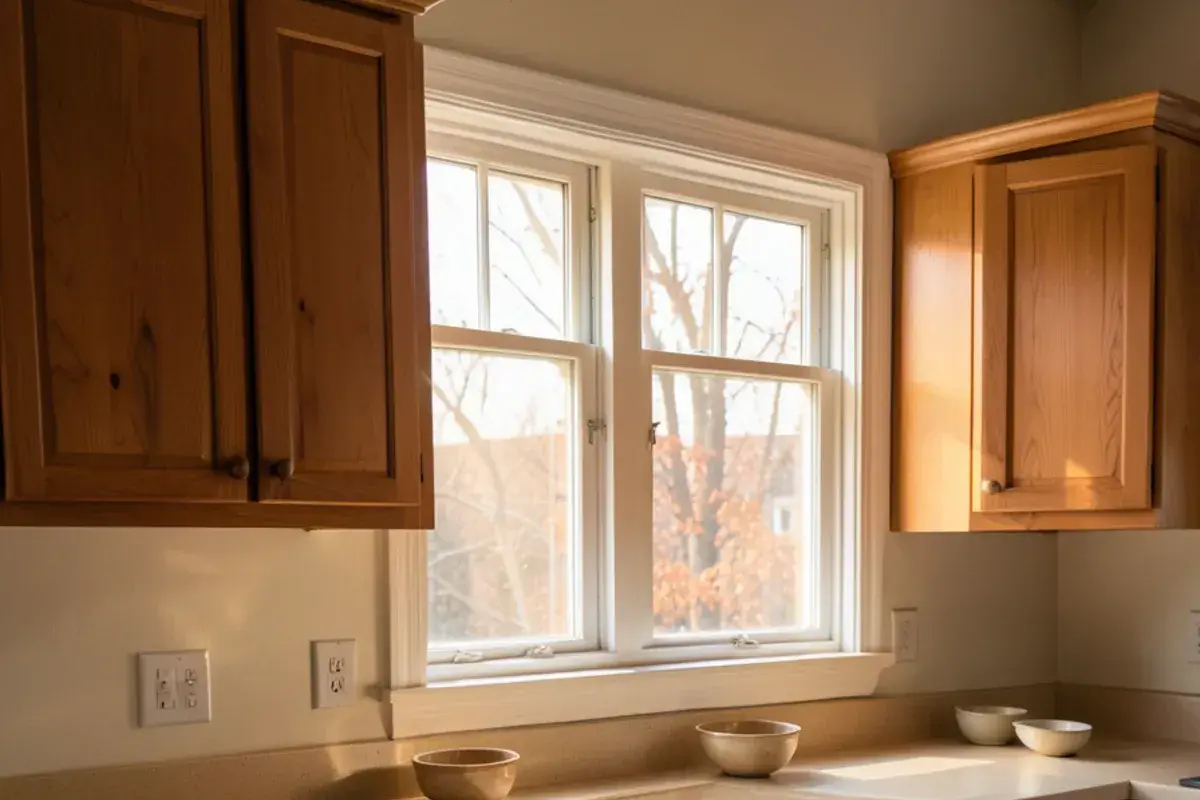
Sunlight is the other factor. Wood species age under light, and cherry in particular darkens noticeably in its first years. If a door near a sunny window looks deeper than its neighbors, that is the wood maturing, not a defect. Keeping blinds partly closed during the brightest months slows the change but will not stop it.
Kitchen cabinet care around moisture and heat
Heat is the quieter threat. A self-cleaning oven cycle runs far hotter than any recipe, and cabinet care guides advise opening the doors and drawers nearest the oven before you start it so heat does not build up against the finish. Oven cleaner spray should never drift onto cabinet faces, and a heat shield on the side of a tall oven cabinet or under a toaster spot protects the edge banding.
Grease is a nuisance. Water and steam are what actually ruin cabinets, because they get into seams and edges where the finish is thinnest. A few habits head off most of the damage.
- Do not hang damp dish towels over the sink door; use a hook or a bar inside a nearby cabinet.
- Let the dishwasher cool for a while before opening it so the burst of steam does not hit the counter edge and adjacent doors.
- Move kettles, rice cookers and slow cookers out from under the upper cabinets while they vent steam.
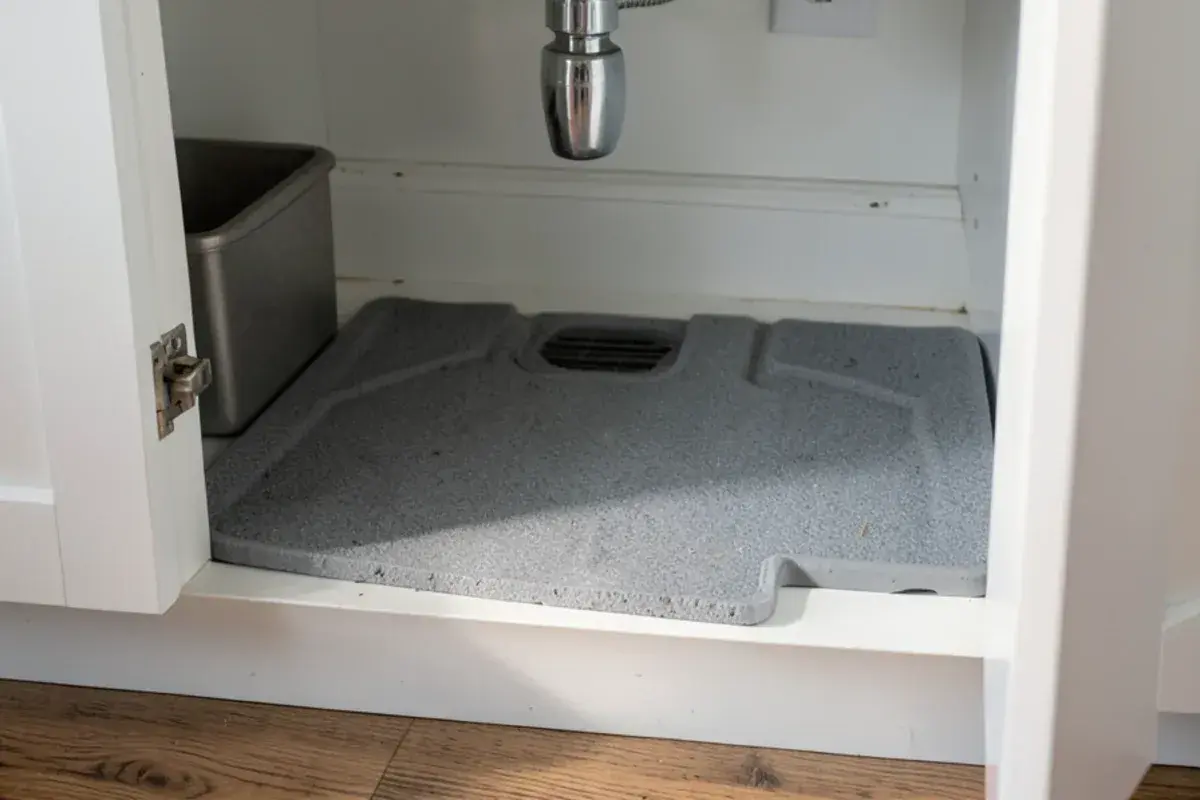
- Put a waterproof liner or leak mat in the sink base, and check supply lines and the drain trap a few times a year.
- Wipe splashes on toe kicks and end panels promptly, especially near the sink and refrigerator water line.
What to keep away from cabinet finishes
Manufacturer care sheets differ in wording but agree on the list. These products either strip the topcoat, leave a film that traps dirt, or soften the finish so it scuffs:
| Avoid | What it does to the finish |
|---|---|
| Bleach and ammonia cleaners | Discolor stains and paint and can attack the topcoat |
| Citrus and solvent degreasers | Soften or haze the clear coat, especially on doors near the range |
| Silicone sprays, waxes and polishes | Leave a film that collects dust and complicates touch-up later |
| Mineral oil and petroleum products | Smear and attract grime instead of removing it |
| Abrasive pads, steel wool, powdered cleansers | Scratch and dull the sheen in visible patches |
New cabinets need one more allowance. One cabinet maker states its finishes take about 30 days to cure fully after application, so for the first month after installation stick to a damp cloth, skip any cleaner stronger than mild soap and hold off on adhesive hooks or bumpers inside the doors.
Why do painted doors show hairline lines in a Michigan winter?
Five-piece painted doors are built from a frame and a center panel, and solid wood expands and contracts with humidity. Michigan homes swing from humid summers to very dry, heated winter air, so a thin line can appear where the rails meet the stiles. It is a normal characteristic of painted wood, not a failure of the paint, and most manufacturers note it in their literature.
Many cabinet makers recommend keeping indoor relative humidity in a moderate band; one manufacturer's humidity guide puts the common recommendation at 35 to 55 percent year-round, and some warranty sheets treat movement within their stated band as normal rather than a defect. A humidifier on the furnace or a standalone unit in winter helps the wood, the floors and the people. Check your own manufacturer's care sheet for its exact range.
A twice-a-year cabinet maintenance checklist
- Open the sink base with a flashlight and look for drips at the supply valves, the trap and the dishwasher drain loop.
- Read a simple hygrometer in the kitchen at the start of the heating season and again in midsummer.
- Tighten any decorative pulls that have started to spin; a loose pull wears a ring in the finish.
- Vacuum crumbs out of drawer slides and hinge cups so soft-close mechanisms keep working smoothly.
- Check door and drawer alignment and make the quarter-turn adjustments described below.
- Look over the doors beside the range, dishwasher and sink for early dulling or lifted edges, and touch up chips.
Adjusting hinges and drawers yourself
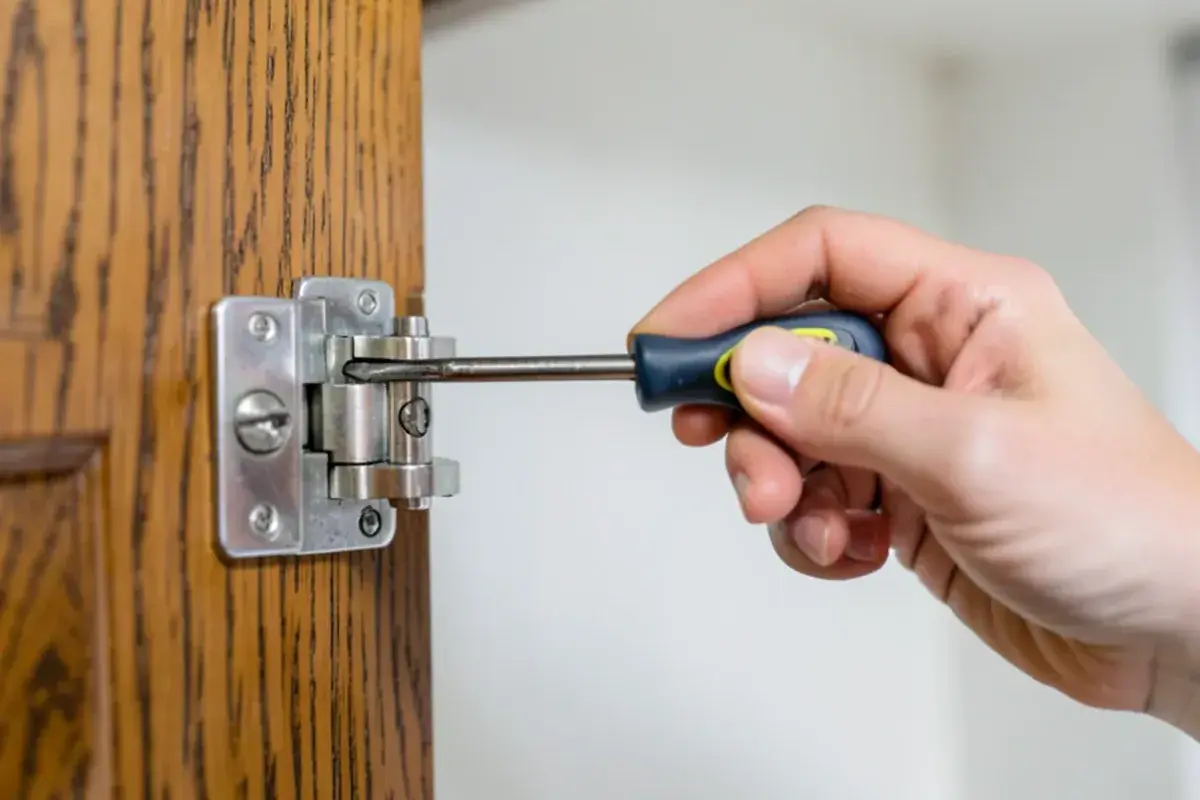
Doors that drift out of line are usually a two-minute fix. Most modern concealed hinges have three adjustment screws, and a Phillips screwdriver is all you need.
| Problem | Adjustment | Where to find it |
|---|---|---|
| Gap between two doors is uneven | Side-to-side | Screw closest to the door edge on the hinge arm |
| Door sits higher or lower than its neighbor | Height | Screws on the mounting plate fixed to the cabinet |
| Door stands proud or will not close flush | Depth (in and out) | Screw nearest the cabinet side on the hinge arm |
| Drawer front is crooked | Front tilt or height | Levers or cams on undermount slides beneath the drawer box |
Turn screws a quarter turn at a time and check after each one. If a hinge screw spins without tightening, the hole has stripped; that is a job for the installer rather than a bigger screw, and a good cabinet installation leaves a list of who to call. The written warranty from your cabinet manufacturer and installing contractor spells out who handles what.
Nick on cabinets that age well
The cabinets I see age badly almost never wore out from cooking. They failed at the sink base, or beside a dishwasher that steamed the same corner every night. That is why I pay close attention to finished ends, sink base liners and appliance spacing during design, and why I talk to clients about care before the doors are even installed.
My other advice: keep a small touch-up kit from your cabinet supplier, and use it on a chip right away. A dab of matching finish on a fresh nick protects the wood underneath and keeps the damage from spreading. Kits usually pair a marker for surface scratches with tinted fill for deeper dents; order it with the cabinets so the color matches your actual batch.
The honest limit of care is this: no routine fixes a design that puts a dishwasher vent against a painted end panel or a coffee maker under an upper. I would rather move an appliance on the drawing than ask you to babysit a finish for twenty years.

Nicholas Vanderhovel, CMKBD, CAPS, CLIPP
Owner and designer at Kitchen NV in Pinckney, MI, and a Michigan-licensed residential builder (#2101209269). About Nick
Cabinet Care: quick answers
What cleaner is safe for kitchen cabinets?
Warm water with a few drops of mild dish soap is safe for nearly every painted and stained cabinet finish. Use a well-wrung microfiber cloth and dry the surface immediately. Avoid ammonia, bleach, oil soaps on painted doors and abrasive pads. If your cabinet manufacturer recommends a specific product, follow that, and ask for the maker's care sheet when the cabinet order is placed so you have it on hand.
Can I fix a cabinet door that will not close evenly?
Usually, yes, with a screwdriver. Concealed hinges adjust side to side, up and down and in and out, so you can close an uneven gap or bring a door flush with its neighbor. Work in quarter turns. If the hinge screw spins in a stripped hole, call the installing contractor instead; homeowners in Howell and nearby towns can ask Kitchen NV which partner handled the install.
Are hairline cracks on painted doors a defect?
Generally not. Painted five-piece doors are made from separate wood parts that move slightly with seasonal humidity, and a fine line at the joints is a known trait of painted wood. Dry winter heat in South Lyon and across Southeast Michigan makes it more visible. Moderate indoor humidity helps; anything wider than a hairline is worth reporting under the manufacturer's warranty.
How soon can I clean new cabinets normally?
Give a new factory finish about a month before treating it like an everyday surface. At least one cabinet maker says its finishes need roughly 30 days to cure fully, and the coating is softer until then. During that window, wipe with a barely damp cloth and dry it right away. Nick hands over the manufacturer's care sheet at install so you have its exact guidance.
Clean gently, dry quickly, keep water and steam off the wood and adjust hinges before small misalignments become chipped edges. That routine keeps both painted and stained cabinets looking right for a long time.
If you are planning new cabinetry and want finishes and details chosen with upkeep in mind, the kitchen cabinets design process starts with a conversation with Nick at (810) 923-8792.
Sources
- How Humidity Affects Wood Cabinets — ROC Cabinetry
- Cleaning and Care — ROC Cabinetry
- Essential Tips for Maintaining Your Cabinets — Conestoga Wood Specialties
Related services and areas