
A certified master kitchen and bath designer (CMKBD) is a designer who has held the National Kitchen & Bath Association’s Certified Kitchen & Bath Designer credential for at least six continuous years without a lapse in continuing education, and who has then documented professional contributions and client and industry references to earn NKBA’s highest design certification.
In practical terms, it signals sustained, verified experience in both kitchens and baths. Kitchen NV’s owner, Nick Vanderhovel, holds the CMKBD. Below we explain the NKBA’s credential levels as the association describes them today, what a master-level designer actually does on a remodel, Nick’s other credentials, and how to check any designer’s claims yourself.
What is the NKBA, and why do its credentials matter?
The NKBA is a North American trade association for the kitchen and bath industry. Its certifications are built on its own Kitchen and Bath Planning Guidelines, which set recommended clearances, landing areas, lighting and accessibility practices that a designer is tested on.
That matters because Michigan does not license kitchen and bath designers. Without a state license, an independent certification is the clearest outside evidence that a designer has been examined on planning standards and has real project experience behind the title.
Questions about your own project? Call Nick at (810) 923-8792
Call Kitchen NV in Pinckney, Monday to Friday, 9 a.m. to 5 p.m. Design consultations are by appointment.
- ★ 5.0 on Google (28 reviews)
- MI Residential Builder #2101209269
- CMKBD · CAPS · CLIPP designer
- Serving since 2020
How do the AKBD, CKBD and CMKBD differ?
NKBA certification has changed over the years, and older designations still appear after many designers’ names. Here is how the main levels compare, based on the NKBA’s certification pages:
| Credential | Status today | What it requires |
|---|---|---|
| AKBD: Associate Kitchen & Bath Designer | Legacy designation, no longer awarded; existing holders still appear in NKBA’s directory | Foundational education and assessment, per NKBA’s directory description |
| CKBD: Certified Kitchen & Bath Designer | Current certification | One of three eligibility paths (for example, seven years in the industry with three as a kitchen and bath designer), plus a Fundamentals Exam and a Portfolio Exam |
| CMKBD: Certified Master Kitchen & Bath Designer | NKBA’s master level | An active CKBD or CKD for at least six continuous years, a resume of professional contributions, and three client plus two industry references from the last three years |
NKBA also lists the older CKD and CBD (kitchen-only and bath-only certifications) as legacy designations. CKD holders seeking the master level must also pass a bath exam and portfolio review. Certified designers keep their status by completing 20 hours of approved continuing education each cycle.
What does a certified master kitchen and bath designer do on a remodel?
The title describes experience, not a different job. A master-level designer does the same work as any good kitchen and bath designer, with years of practice behind each decision:
- Listens to how a household cooks, bathes, stores and moves, and turns that into a functional layout.
- Applies NKBA planning guidelines for clearances, landing space and access without needing to look them up.
- Designs cabinetry in detail, including fillers, scribes and custom pieces for difficult walls.
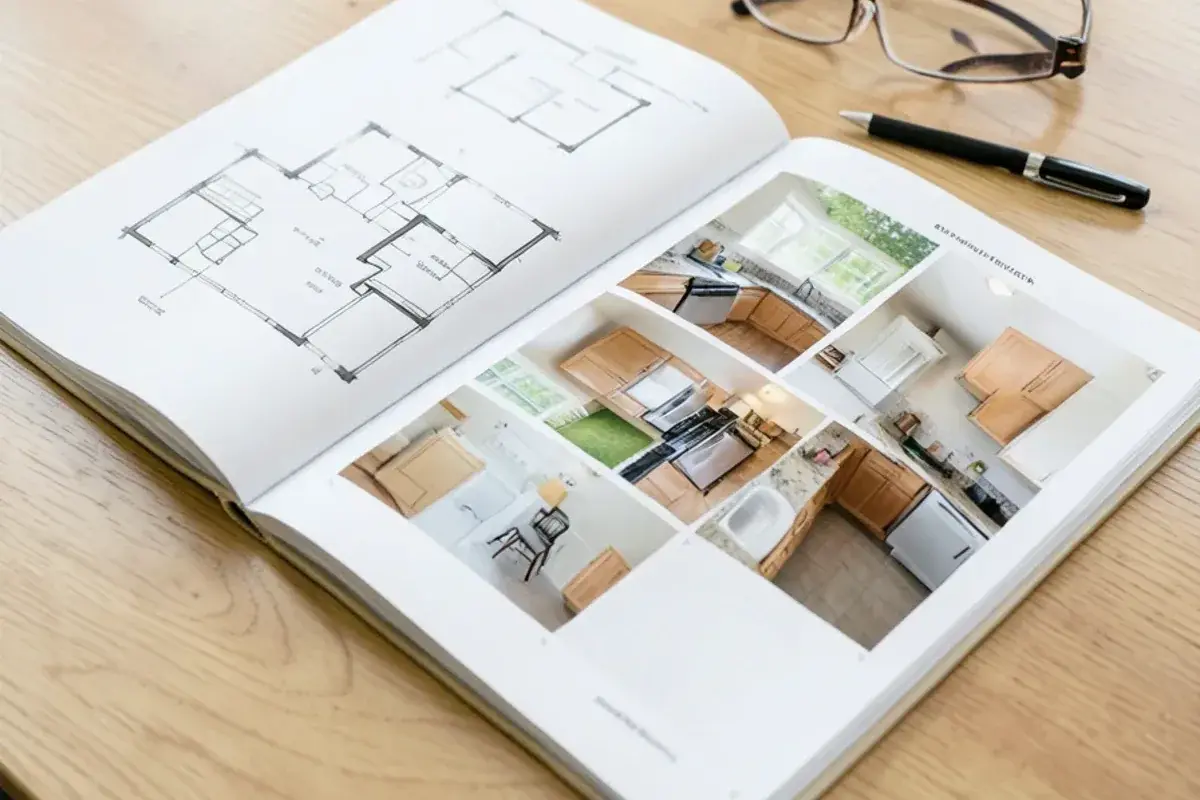
- Produces drawings complete enough for trades to build from: plans, elevations, installation and lighting drawings.
- Guides selections of counters, tile, fixtures, lighting and hardware so they work together.
- Coordinates with contractors and stays engaged through installation.
At Kitchen NV, all of that sits inside our kitchen design service, and it applies equally to bathrooms, laundry rooms, basements and built-ins. A design consultation is the first step for any of them.
What do the NKBA certification exams actually test?
Every NKBA design credential rests on two exams, and knowing what they measure helps you judge what the letters are worth. Both are described on the association’s certification page.
Fundamentals Exam
Scenario-based questions on applying the Kitchen & Bath Planning Guidelines: aisle widths, landing areas beside each appliance, clearances at seating, ventilation, receptacle and lighting basics. It tests judgment on real layouts, not memorized definitions.
Portfolio Exam
A panel of NKBA-certified jurors reviews one real kitchen and one real bath the candidate designed as designer of record. Each submission needs a full drawing set, written specifications, a design statement and at least two before and two after photographs.
Graphic standards
Portfolio drawings must follow NKBA’s Graphic & Presentation Standards, which NKBA itself notes are more detailed than the floor plans most interior designers produce.
The guidelines behind the exams are not static. NKBA has published them since 1992, and the current fifth edition was revised to line up with the 2024 International Residential Code. They now reach beyond kitchens and baths to closets, laundry areas, home offices and other support spaces, which is why a certified designer is often the right call for a mudroom or a basement bar as well as the kitchen. Certified designers then owe 2.0 continuing education units, equal to 20 hours, every cycle to stay current.
What a certification cannot tell you about a designer
A credential proves knowledge and a track record. It does not prove fit, and it is honest to say so. Before you hire anyone, certified or not, judge these things for yourself:
- Whether the designer’s past kitchens look like rooms you would want to live in, not just rooms that pass the guidelines.
- Whether they listen more than they talk in the first meeting.
- How many projects they carry at once, and who you will actually deal with week to week.
- Whether construction is coordinated by someone with a Michigan builder license, since NKBA certification does not authorize anyone to contract the build.
- Whether the fee structure and deliverables are written down before you pay.
Plenty of capable designers never pursue certification, and a credential is no substitute for references. What it does give you is a floor: proof that someone outside the company has examined the designer’s planning knowledge and reviewed real, built work. Our checklist for hiring a kitchen designer covers the rest of the interview.
CAPS and CLIPP: Nick’s credentials for designing for every age
Beyond the CMKBD, Nick holds two credentials focused on homes that work for people as they age or as their abilities change:
- CAPS (Certified Aging-in-Place Specialist). Awarded by the NAHB, the home builders’ national association, after three courses covering aging-in-place design principles, product selection, installation and budgeting for home modifications.
- CLIPP (Certified Living in Place Professional). Issued by the Living in Place Institute, this one centers on home accessibility, health and safety for people of all ages.
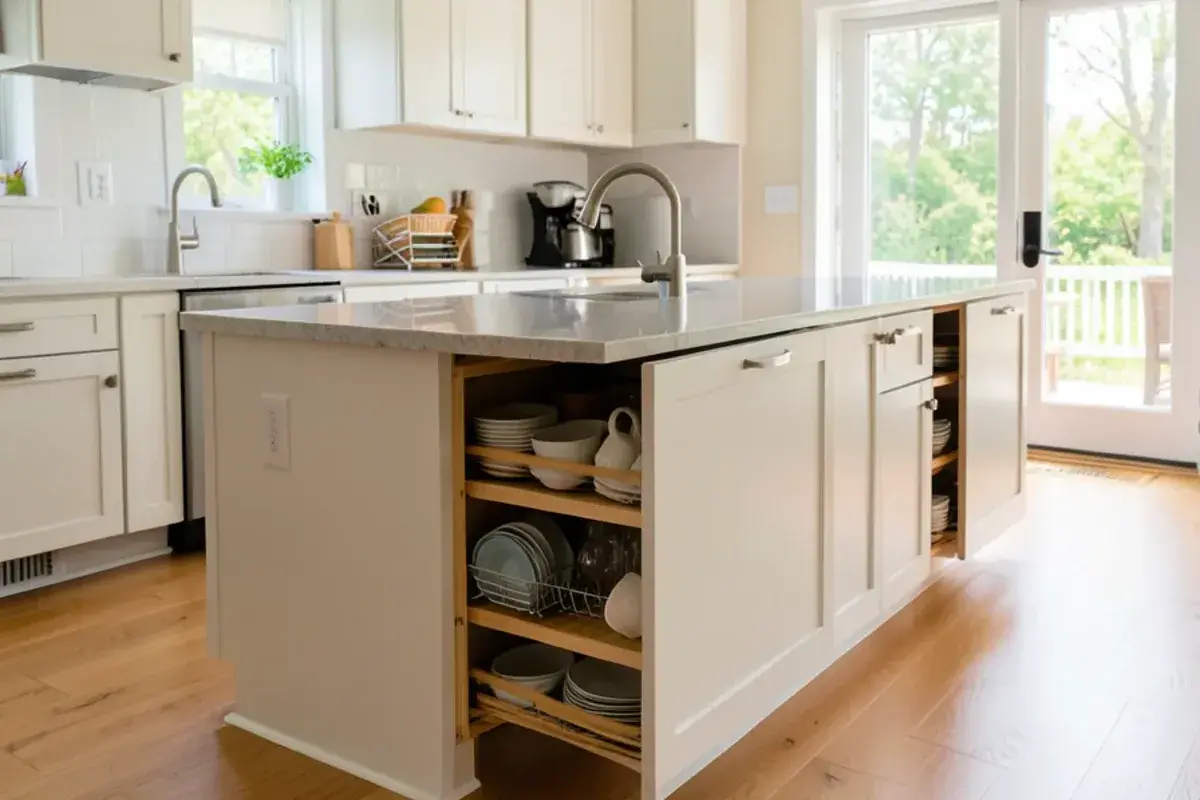
Those credentials show up in details like drawer storage instead of deep base shelves, varied counter heights, and curbless showers. Our accessible kitchen design page goes further into what that looks like.
How can you verify a designer’s credentials and license?
You should never have to take a designer’s word for it. Both of Nick’s key qualifications can be checked in a few minutes:
NKBA certification
Open the designer directory on nkba.org and use its verification option to confirm a designer holds an NKBA credential.
Michigan builder license
Search the state licensing agency’s online lookup (LARA, Michigan’s Department of Licensing and Regulatory Affairs). Nick’s individual residential builder license is number 2101209269, issued in 2015 and valid through May 31, 2029.
Other credentials
Ask which organization issued each title, then check that organization’s directory or contact it directly.
The builder license is Nick’s personally, and it matters because Michigan’s Occupational Code requires licensing for residential construction work of $600 or more. Homeowners from Pinckney to Ann Arbor are welcome to check both before their first meeting.

Nick on what the master credential means to him
For me, the CMKBD is less about the letters and more about what it took to get there: years of designing kitchens and baths, keeping up with continuing education, and having clients and industry partners willing to vouch for the work. It is a commitment to keep learning, not a finish line.
I encourage homeowners to verify me, and anyone else they interview. Credentials only mean something if they can be checked. Once that is settled, the more useful conversation is about your house, your habits and what you want the room to do for you.

Nicholas Vanderhovel, CMKBD, CAPS, CLIPP
Owner and designer at Kitchen NV in Pinckney, MI, and a Michigan-licensed residential builder (#2101209269). About Nick
What Does a Certified Master Kitchen & Bath Designer Do: quick answers
Is a CMKBD the same as a licensed contractor?
No. The CMKBD is a design certification from the NKBA, not a state license. Contracting residential construction in Michigan requires a state license from LARA. Nick holds both: the CMKBD and an individual residential builder license, number 2101209269. For construction, he coordinates partner contractors from Kitchen NV’s Pinckney studio and stays involved through installation.
What is the difference between a CKBD and a CMKBD?
A CKBD has passed NKBA’s Fundamentals and Portfolio exams after meeting experience or education requirements. A CMKBD is a CKBD or CKD who has held that certification for at least six continuous years, kept continuing education current and submitted a resume of contributions plus client and industry references. It is NKBA’s master level.
Does a certified master designer cost more to hire?
Not necessarily. Fees depend on each designer’s structure, not the credential alone. Kitchen NV opens a project with a design retainer, selection help is hourly or packaged, and cabinetry is covered by a separate purchase agreement. The experience behind a master credential often shows up as fewer costly corrections during construction in Livingston and Washtenaw county homes.
Does NKBA certification cover bathrooms as well as kitchens?
Yes. Today’s CKBD and CMKBD are combined kitchen and bath credentials. The portfolio review requires a complete drawing set, specifications and before-and-after photos for one built kitchen and one built bath, and the planning guidelines include bath clearances and fixture spacing. Nick applies the same standards to master baths and powder rooms around Pinckney and Brighton as to kitchens.
A certified master kitchen and bath designer has held NKBA certification for years, maintained continuing education and earned references from clients and peers. Combined with Nick’s CAPS and CLIPP credentials and his Michigan residential builder license, it means you can verify the qualifications behind the plan for your kitchen or bath.
Check the credentials first; after that, a phone call to (810) 923-8792 is the quickest way to start a conversation with Nick.
Sources
- Certifications — National Kitchen & Bath Association
- Find a Certified Designer — National Kitchen & Bath Association
- Certified Aging-in-Place Specialist (CAPS) — National Association of Home Builders
- Living in Place Institute — Living in Place Institute
Related services and areas